
Exploring the Key Sites of Gyeongbokgung Palace – A Journey Through Korea’s Royal History
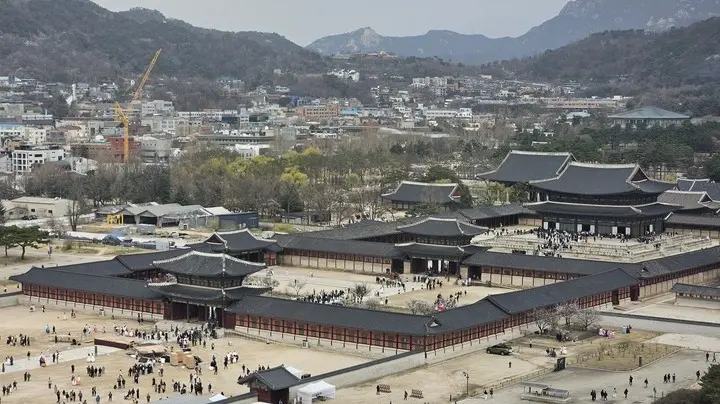
Gyeongbokgung Palace is one of the most iconic landmarks in Seoul and was the heart of the Joseon Dynasty for 500 years(1392–1897). Let's take a short but full tour of the main structures within the palace grounds and their historical significance.
Highly recommend you to refer this article when you visit the palace 😎
1. Gwanghwamun (광화문) – Main and South Gate
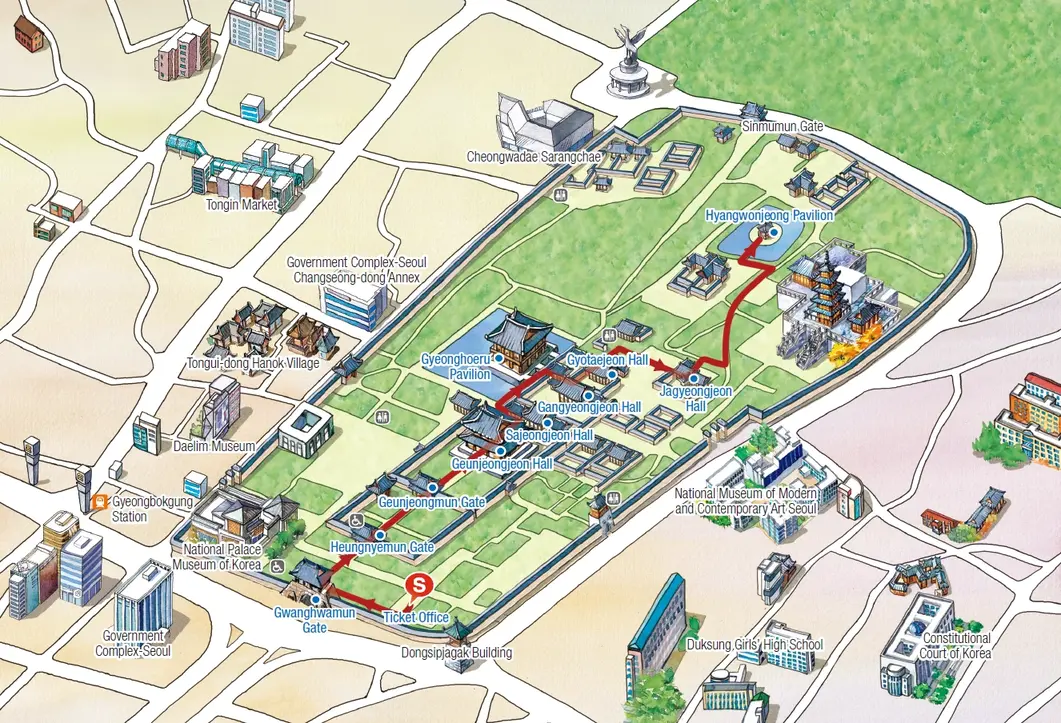
Gwanghwamun serves as the grand entrance to Gyeongbokgung. Originally built in 1395, it symbolized the palace’s authority and the king's dignity. The gate has been destroyed and reconstructed several times due to invasions and conflicts. Its current structure, restored in 2010, stands proudly with three arched entryways, symbolizing royal power and prestige.
2. Heungnyemun (흥례문) – Second Inner Gate
After passing through Gwanghwamun, visitors reach Heungnyemun, the gate that marks the entrance to the palace’s inner grounds. Constructed to emphasize security and protection, Heungnyemun played a ceremonial role, especially during royal processions. Guards stood watch here to secure access to the palace’s administrative and residential areas.
3. Geunjeongmun (근정문) – Third Inner Gate
This gate serves as the last entrance to the core of the palace, including the throne hall and administrative offices. Built on elevated stone platforms, Geunjeongmun provided a symbolic separation between the common areas and the king's formal court, reinforcing the majesty of royal authority.
4. Geunjeongjeon (근정전) – Imperial Throne Hall
Geunjeongjeon is the centerpiece of Gyeongbokgung and was the site of the king’s most important state affairs. This grand hall, completed in 1395, hosted royal ceremonies such as coronations, diplomatic receptions, and state banquets. Inside, the king's throne sits beneath a painted canopy depicting the Irwolobongdo (a sun, moon, and five mountain peaks), symbolizing the harmony between the king and nature.
5. Sajeongjeon (사정전) – Executive Office
Behind the throne hall lies Sajeongjeon, where the king handled daily governance and met with royal advisors. The building's name, meaning "Hall of Executive Affairs," reflects its purpose as a space for serious decision-making. Unlike the throne hall, Sajeongjeon was designed for practicality and frequent use.
6. Gyeonghoeru (경회루) – Royal Banquet Pavilion
Gyeonghoeru is one of the most visually striking structures within the palace grounds. Built in 1412, this large, two-story pavilion sits on an artificial pond. It was used for royal banquets and diplomatic events. The expansive stone terraces, surrounded by water and gardens, symbolized the king's authority over peaceful governance.
7. Gangnyeongjeon (강녕전) – King’s Quarters
Gangnyeongjeon was the king's personal residence within the palace. The structure was designed for privacy and tranquility, featuring multiple chambers where the king could rest and conduct informal meetings. It reflects a more modest design compared to the ceremonial halls, focusing on the king’s daily life and well-being.
8. Gyotaejeon (교태전) – Queen’s Quarters
Gyotaejeon was the residence of the queen and housed her private living quarters. Built near the king’s quarters, this area symbolized the importance of the queen’s role in maintaining the royal family’s lineage and stability. Behind Gyotaejeon is the Amisan Garden, a beautifully landscaped area with terraced stone structures and decorative chimneys.
9. Jagyeongjeon (자경전) – Late Queen’s Quarters
Jagyeongjeon was constructed as the residence for the king’s mother or dowager queen. The building is notable for its intricate architectural features, including floral and geometric tile designs on the roof. It served as a space of honor and respect for the elder royal women of the palace.
10. Hyangwonjeong (향원정) – Hyangwonjeong Pavilion
Hyangwonjeong Pavilion is located in a more secluded area of the palace, surrounded by lush gardens and a peaceful pond. Built in 1873 by King Gojong, the pavilion served as a retreat for quiet reflection. Connected to the palace by an arched wooden bridge called Chwihyanggyo, Hyangwonjeong is a symbol of harmony between man and nature.
Final Tips
There is a group guide program operated by Seoul City for the convenience of tourists. You can apply below.
Click Here (you're linked to VisitSeoul.net)
![[Food in Seoul] Michelin Bib Gourmand Noodle & Dumpling Restaurant "Hwangsaengga Kalguksu" - near GyeongBokGung, ChungWaDae](/api/image-proxy?path=blog_posts%2F1739076367392%2Fimage-0-hwangsaengga_01.webp&token=a19501c2-3780-4594-90a0-9f129654763e)

![[Food in Seoul] Via Toledo Pasta Bar – The Culinary World of Chef Kwon Seong Joon (Napoli Mafia)](/api/image-proxy?path=blog_posts%2F1739008404442%2Fimage-0-via_toledo_01.webp&token=38c0e3d3-e02e-4bcb-b728-8c73df27e9ff)